Plex vs Epicor Kinetic vs Global Shop: $50M Manufacturer
At $50M, most manufacturers outgrow QuickBooks but pick the wrong ERP. Here is what Plex, Epicor Kinetic, and Global Shop actually deliver.
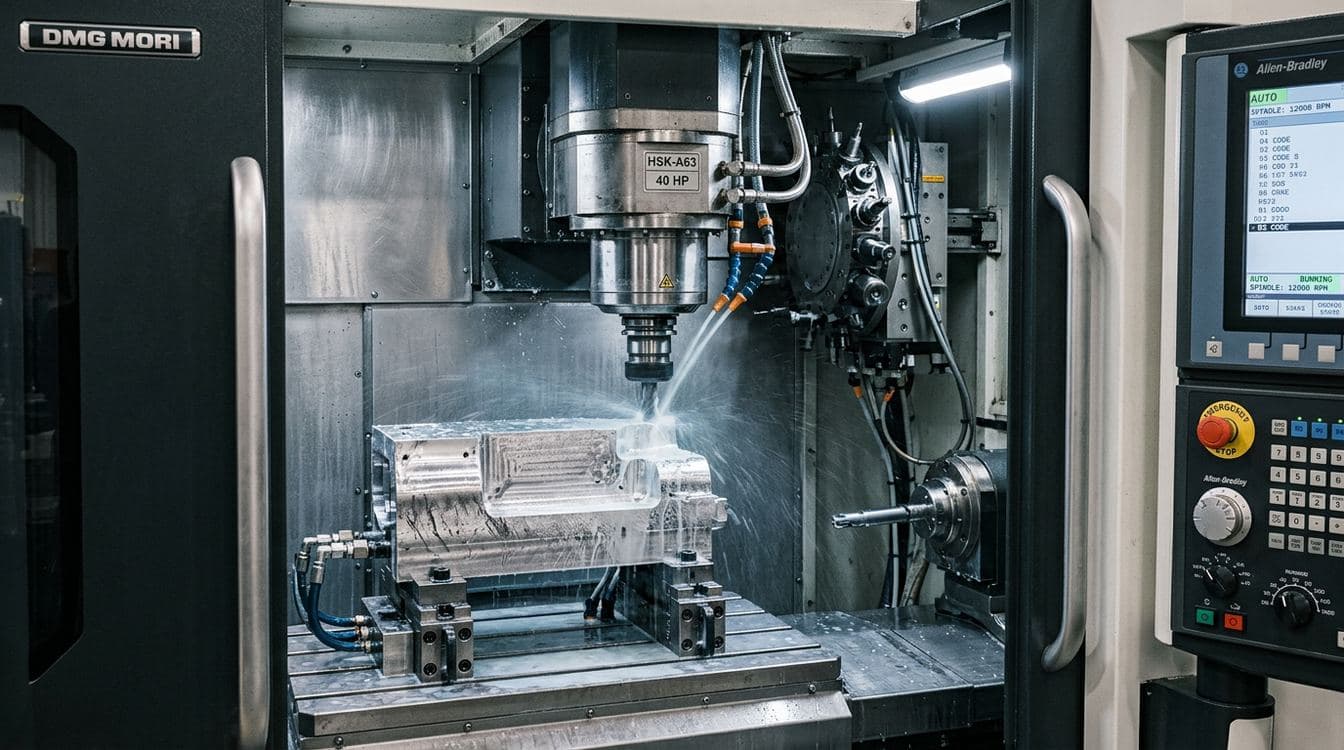
TL;DR. Plex, Epicor Kinetic, and Global Shop Solutions all pitch themselves as the right ERP for a $50M discrete manufacturer. They are not interchangeable. Plex (Rockwell Automation) is cloud-only and MES-first. Epicor Kinetic is the most flexible across discrete and mixed-mode. Global Shop Solutions bundles software, implementation, and support into one price but caps out around 250 users. Pick by what breaks first at $50M: job cost accuracy, shop floor data collection, or multi-site visibility.
The right ERP for a $50M discrete manufacturer is the one that solves your worst data problem first. If the shop floor lies to your job costs, Plex's MES-native architecture is the cleanest fit. If your processes vary across product lines and you need flexibility, Epicor Kinetic. If you run a job shop and your CFO is tired of separate line items for software, implementation, and training, Global Shop Solutions bundles them. Most $50M manufacturers pick wrong because they evaluate ERPs on features they can see in a demo, not the daily operational problems they cannot solve with the system they have.
The Three Contenders
By the time a discrete manufacturer crosses $40M and starts looking past QuickBooks Enterprise or Sage 100, three names show up in most shortlists. The pricing and positioning per ERP Research's 2026 comparison, Top10ERP, and ERP Pilot:
- Plex Manufacturing Cloud (Rockwell Automation): cloud-only multi-tenant SaaS, MES + ERP on one data model, $120 per user per month, 4 to 9 month implementation, $100K to $600K total project.
- Epicor Kinetic: cloud, on-premise, or hybrid, $80 to $200 per user per month plus platform fee, 5 to 10 month implementation, $435K to $1M three-year TCO at 100 users. The most widely deployed of the three with 4,500-plus mid-market installs and 23,000-plus total customers.
- Global Shop Solutions: cloud or on-premise, ~$65 per user per month, 2 to 5 month implementation, $75K to $200K all-inclusive first-year cost bundling software, implementation, training, and support. Scalability limit around 250 users.
Plex Manufacturing Cloud: MES-First, Cloud-Only
Plex makes the most sense for a $50M manufacturer whose worst data problem is what happens on the shop floor between work order release and finished goods.
Plex was born as a manufacturing execution system before it became an ERP. That heritage shows. The platform's Smart Manufacturing Platform integrates ERP, MES, quality management, supply chain planning, and asset performance management on a single data model. Operators clock in and out of jobs in the same system that generates the invoice. Quality checks happen at the workstation with real-time visibility to the plant manager and the controller. The OEE math is not reconstructed from a spreadsheet at the end of the week, it is the system.
The Rockwell Automation ownership matters. If your plant runs Allen-Bradley PLCs, ControlLogix, or FactoryTalk, Plex's native integration with FactoryTalk is a structural advantage. Manufacturers running Siemens, ABB, or other automation vendors get less of that benefit, per SmarterWay's Plex review.
Where Plex breaks at $50M:
- Procurement and financials are not the strongest modules. ERP Research's feature-by-feature comparison gives Plex weaker scores on procurement than Epicor Kinetic. If your CFO is the loudest voice in the ERP search and your auditors are demanding tighter purchasing controls, this matters.
- Cloud-only is a constraint, not a feature, for some manufacturers. ITAR-controlled defense suppliers, customers with on-premise mandates from primes, or facilities in regions with unreliable connectivity need to look elsewhere or accept hybrid limits.
- Customer retention is lower than Epicor. Top10ERP shows Plex at 79 percent retention versus Epicor Kinetic at 97 percent. The gap likely reflects the cost and rigidity tradeoff: Plex's higher per-user price and standardized process model produce friction at sites that need flexibility.
The Plex case is strongest when you make repeatable discrete products in volume, your automation is already Rockwell, and your binding constraint is real-time visibility into what every machine and operator is actually doing.
Epicor Kinetic: The Flexible Middle Path
Epicor Kinetic is the safe answer for the $50M manufacturer whose processes do not fit a single mold.
Most $50M discrete shops have at least two production modes: higher-volume make-to-stock for established products, plus engineer-to-order or make-to-order for custom work, often through the same shop. Plex is built around standardization. Global Shop is built for job shops. Epicor Kinetic handles both at once. EC Solutions' 2026 comparison frames Epicor as the better fit for manufacturers with complex or changing processes, broad ERP scope, and multi-site operations.
The tradeoff is implementation complexity. Epicor Kinetic implementations take 5 to 10 months and require more discovery and configuration decisions than the standardized alternatives. ERP Pilot estimates 30 to 50 percent contingency on top of initial estimates, with total year-one investment usually 2 to 4x annual license cost. The 97 percent retention number suggests the platform delivers what it promises after the implementation pain.
Where Epicor Kinetic breaks at $50M:
- The flexibility cuts both ways. Without disciplined process governance, the customization that gives Epicor its range can produce 47 versions of the same workflow across plants. Multi-site rollouts where each location configures Epicor independently are the most expensive ERP projects we see.
- The shop floor experience is not as native as Plex. Epicor has MES capabilities, but they are not the platform's structural center. Shop floor data collection works, but the integration to plant-floor automation is less tight if you are running Rockwell equipment.
Global Shop Solutions: Job Shop with Bundled Pricing
Global Shop Solutions is the right answer for a specific kind of $50M manufacturer: the job shop or specialty discrete shop with 80 to 150 employees, 20 to 50 ERP users, and a CFO who is allergic to surprise costs.
The all-inclusive pricing model is the structural differentiator. According to ERP Research, Global Shop bundles software, implementation, training, and support into one custom quote. Most ERP vendors price these separately, then quote services, change orders, and additional users at premium rates throughout the lifecycle. A typical 10 to 30 user Global Shop deployment lands at $75K to $200K in the first year with no separate implementation invoice. For a CFO who has been through one bad ERP implementation already, that pricing model is itself the sales pitch.
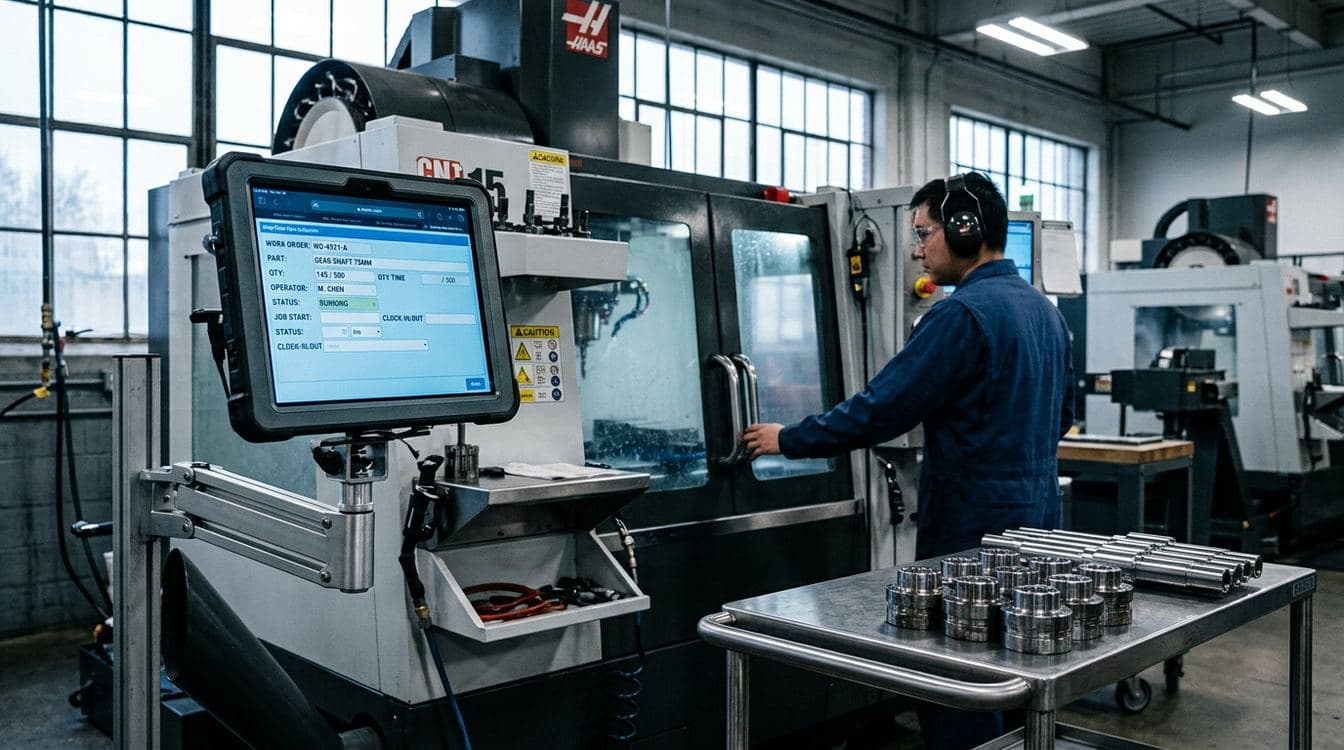
The product strength is shop floor data collection. SFDC screens are licensed without per-user fees, so every operator can clock in and out of work orders without a finance-department fight about license counts. TrustRadius reviewers credit Global Shop with the biggest jumps in production accountability when operators start clocking actual work-order time instead of estimating after the shift.
Where Global Shop breaks at $50M:
- Scalability ceiling around 250 users. A growing manufacturer that crosses 250 ERP users will run into platform limits. Most $50M manufacturers have 30 to 80 ERP users, which is well below that ceiling. A $100M+ manufacturer is outside Global Shop's sweet spot.
- Dated UI and slow reporting. Per ITQlick's 2026 review, the user interface lags behind cloud-native competitors like Acumatica and NetSuite, and the built-in business intelligence is slow enough that many customers supplement with Microsoft Power BI for analytics.
- No native field service module. A manufacturer with a service-and-repair business attached to the product (common in industrial equipment) will need a separate system or a third-party add-on.
- AI capabilities lag the cloud-native platforms. Plex's AI production analytics and Epicor's Automation Studio both outpace what Global Shop currently offers natively.
What Actually Breaks at $50M
Most ERP selection processes ask the wrong question. They ask "which platform has the most features?" The right question is "which of our daily operational lies will this platform stop us from telling ourselves?"
At $50M discrete manufacturers, two lies typically run the show.
Lie 1: We know what every job costs. The reality is that 30 percent of the labor cost on most jobs is reconstructed after the fact from estimates, not captured at the workstation. The estimator says a job took 14 hours. The operator who actually ran it could not tell you, because no one was clocking in and out of the specific work order. The job profitability number on the controller's monthly report is partly fiction.
Lie 2: We have one source of truth. The reality at $50M is that the controller's view of the business lives in three systems: the ERP for AR/AP and inventory, an Excel job costing spreadsheet that the cost accountant maintains, and a separate scheduling spreadsheet that the production manager updates. Each tells a slightly different story. Closing the month takes a week of reconciliation.
MES, Quality, and Regulated Manufacturing
The MES versus ERP question is the second filter after job costing. Plex includes a native MES with OEE, traceability, and real-time machine integration on the same data model. Epicor Kinetic has MES capability that is good but not the structural center of the platform. Global Shop has solid SFDC but limited true MES functionality. Many $50M manufacturers compromise by running an ERP plus a third-party MES (Aegis FactoryLogix, iBASEt Solumina, MasterControl), which works but adds integration cost.
Quality is where the gap widens. Plex's Smart Manufacturing Platform includes a multi-tier QMS with real-time digital documentation, audit-ready access, and inline check sheet capture. For a manufacturer pursuing AS9100, ITAR, ISO 9001, or FDA 21 CFR Part 11 compliance, this is structural. Epicor Kinetic has strong quality functionality, particularly in defense and aerospace. Global Shop's quality module is functional but not best-in-class, and regulated manufacturers typically supplement with a separate quality system at $50K to $150K per year. If you are evaluating Plex against Global Shop, the QMS scope difference can change the total cost picture meaningfully.
Total Cost: What the Sticker Hides
For a 60-user $50M manufacturer, the three-year total cost looks roughly like this based on published 2026 pricing:
| Platform | License (3yr) | Implementation | Year 1 Internal Cost | 3-Year TCO |
|---|---|---|---|---|
| Plex Manufacturing Cloud | $260K-$390K | $150K-$400K | $200K-$400K | $610K-$1.2M |
| Epicor Kinetic (Cloud) | $170K-$430K + platform fees | $150K-$350K | $250K-$500K | $570K-$1.3M |
| Global Shop Solutions | $140K-$170K | Bundled | $100K-$200K | $340K-$540K |
The "Year 1 Internal Cost" column is the line most manufacturers leave out of the business case. Implementation pulls 0.5 to 2 FTE-equivalents from operations for 4 to 10 months. Data cleanup, integration testing, and user training cost more than the vendor implementation hours. Manufacturers who model their internal cost as zero get a budget overrun in month four.
Decision Framework: What to Test in the Demo
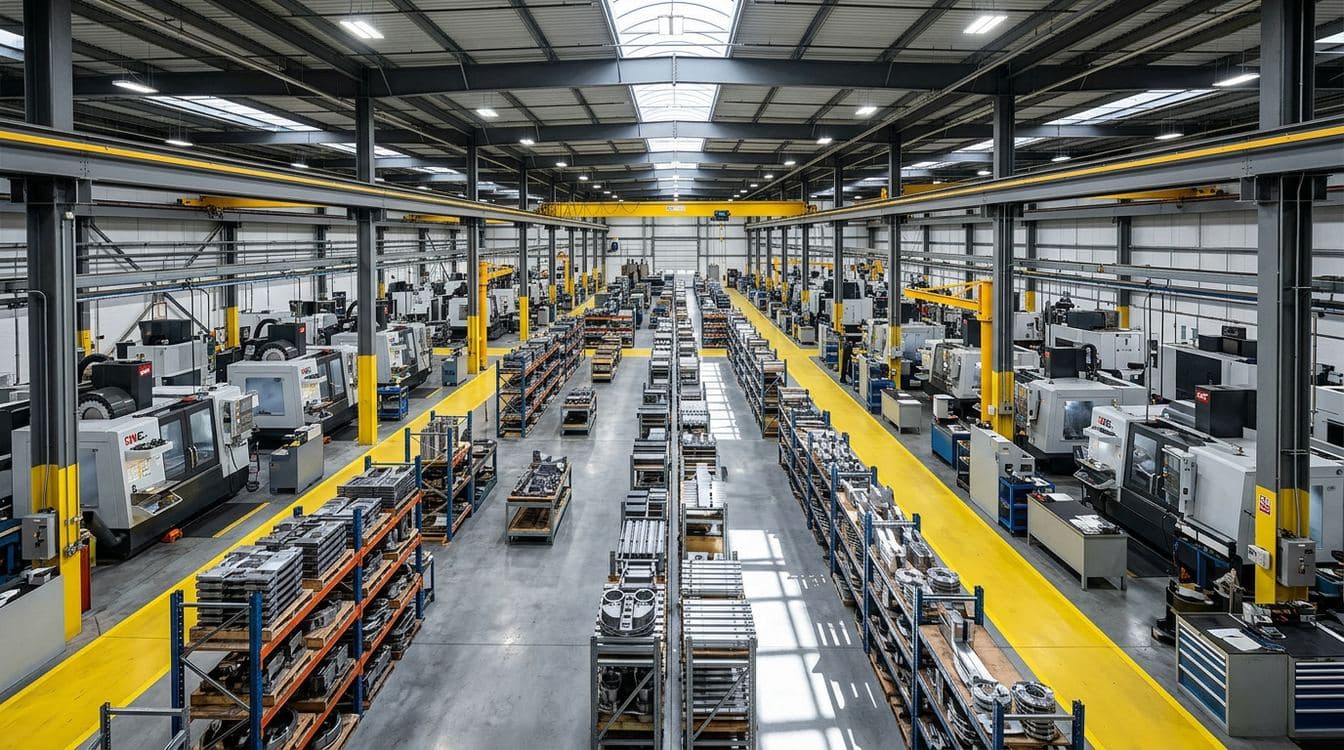
A useful demo is a stress test, not a feature checklist. For each platform, ask the sales engineer to walk through these four scenarios on your data:
- Job cost reconstruction. A four-hour job runs through three operations. One operator clocks in late. One quality hold adds rework time. Show me the job cost number 30 minutes after the job ships.
- Engineering change. An engineering change releases on a part that has 200 units in WIP across two work orders and 800 units on PO. Walk me through how the ECN propagates and what the operator sees on the floor.
- Multi-plant inventory. A customer order needs 50 units. Plant A has 30, Plant B has 25. Show me the platform pick the right combination, transfer the inventory, and produce a single shipment.
- Year-end audit pull. An auditor asks for the complete cost roll-up on a specific finished good produced last quarter, including all labor, materials, scrap, and overhead by operation. Pull it.
The platform that handles all four cleanly is the platform that will not lie to you. The platform that needs a "let me get back to you on that" or "we can build a workflow for that" on more than one of these scenarios is the platform that will produce the same fiction you have in your current system.
FAQ
Is Plex Manufacturing Cloud worth the higher per-user price for a $50M manufacturer?
Plex makes sense at $50M when shop floor data accuracy is your binding constraint and your plant floor already runs Rockwell automation. If your worst problem is procurement or financial close, the price premium is harder to justify.
Can Global Shop Solutions handle a manufacturer growing past $50M to $100M?
Global Shop's 250-user scalability ceiling is the harder limit than the revenue ceiling. A $100M discrete manufacturer with 30 to 80 ERP users can stay on Global Shop. A $100M manufacturer scaling toward 200+ users should evaluate Epicor or Plex before committing.
How long does an Epicor Kinetic implementation actually take?
Vendor estimates of 5 to 10 months consistently undershoot real-world results for $50M manufacturers. Plan 8 to 12 months for a single-site implementation, 12 to 18 months for a multi-site rollout, and budget 30 to 50 percent contingency on the implementation services line.
What is the biggest mistake manufacturers make in ERP selection?
Evaluating on features instead of operational truth. Every modern ERP has the features you can see in a demo. The platforms differ on what they force you to be honest about. Pick the ERP that closes the lie costing you the most money.
Granular works with mid-market manufacturers in the middle of ERP decisions like this one. We do not sell ERP. We help operators figure out which of their daily operational lies is the binding constraint, whether the ERP they have can solve it with a focused tool layered on top, or whether the platform itself needs to change. Most of what we build sits between the ERP and the shop floor: AI agents that catch job cost variance before the month closes, focused tools that reconcile quality holds with engineering changes, narrow workflows that produce the auditor pull in 90 seconds instead of two days. If your $50M plant has an ERP question this year, book 30 minutes and we will tell you straight what is worth solving with software and what is not.
Keep Reading
- Foundation vs Sage 300 vs Acumatica: $50M GC Teardown. The construction equivalent of this teardown, walking through how mid-market GCs evaluate their three ERP shortlist.
- Why Mid-Market Manufacturers Still Print Travelers. Field notes on the shop floor data problem that drives most mid-market ERP shortlists, and what real shop floor visibility actually requires.